

Neil ashdown
Power Member
-
Joined
-
Last visited
Everything posted by Neil ashdown
-
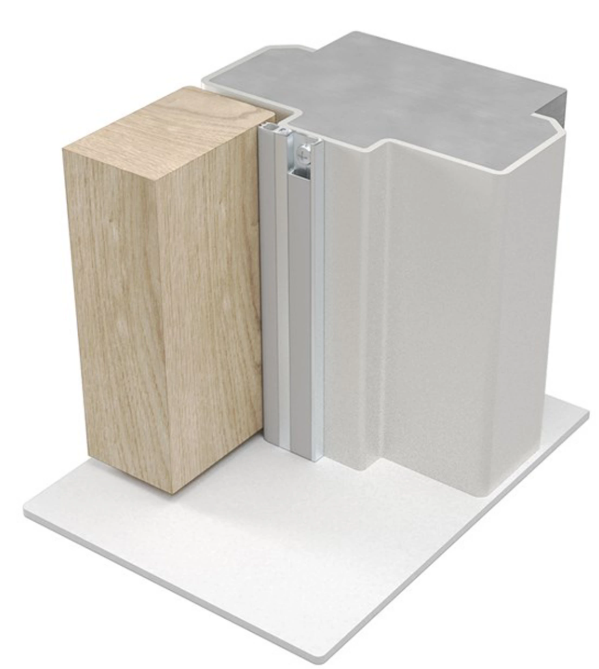
You could slow down the self-closing speed to allow more time for transfer of air between compartments. Fins are more forgiving than brushes in terms of resistance between surfaces (door edges and door frames) but do not mix brushes and fins on the same door. Or you could try a smoke/acoustic seal fitted to the door frame on the rebate stop instead. Lorient LAS700si but there may be others. Obviously you will still need an intumescent fire-only seal.
-
Yes, making the trench wider would mean the fixing screws through the door frame head and into the end of the jamb could be retained. Then, any residual trench-gap made by cutting the door frame head can be made good by filling.
-
To answer your question it would be necessary to colnsult the certiifcation or other evidence of product performance for the fire door. Many standard timber-based fire doors have third-party certification and such work would cause the certifcation to become void. But if you have fabricated the door from a Fire Door Blank it may be possible to cut the aperture and install the glazed panel by following the relevant Technical Manual.
-
By cutting through the screws you would be disregarding the door manufacturers installation instructions. Therefore the product performance certification would most likely become void. However, without removing the complete door assembly you may not be able to adjust the gaps. I would discuss the matter with your client and/or their Fire Risk Assessor before proceeding.
-
BS 8214: 2016 Timber-based Fire Door Assemblies - Code of Practice recommends 20mm as the maximum linear gap width, using mineral fibre and intumescent sealant. Therefore, it would be necessary to refer to the specific evidence of fire resistance performance, using those materials and products, to support a gap of 30mm
-
The best resource for fire door hinges is the Code of Practice - Hardware for Fire & Escape Doors at https://www.firecode.org.uk/Code_of_Practice_hardware_for_fire_and_escape_doors_issue_5.pdf Page 26 paragraph 2.3.13 deals with intumescent protection for fitting to butt hinges.
-
Check the scope of the available evidence of fire resistance performance for the particular door / door-set. If, having done that, you believe that the necessary works required to enable correct installation might compromise the performance of the door, then its apropriate to check with the door manufacturer accordingly.
-
Yes it is possible to resolve the issue without ordering a different size door. But the method used depends on whether the door is composite or timber. If its composite the wall should be extended to the same (or greater) specification as existing. If its a timber door the wall aperature may be lined or the door frame head thickness extended using the same materials as the new door frame. Linings / additions should be full width and continuous in length with no gaps and/or voids. Joints should be tight and fire rated linear gap sealing to be in accordance with BS 8214: 2016 requirements for timber doors and manufactuers certification for composite.
-
The person / contractor should be able to demonstrate sufficient competence to be able to complete the job. Make sure they have the necessary SKEB, see https://www.citb.co.uk/standards-and-delivering-training/training-standards/competence-frameworks/ If you are unsure you could appoint an independant inspector to sign-off the work https://afdi.org.uk/
-
For most fire doors, the performance certification requires the wall to be at least 70mm thick. I am yet to see one where such a thin wall is suitable.
-
Yes it can, but you may need to make the stop lath wider to get a secure fixing.
-
This type of composite fire resisting door was popular in the early 2000s. Is the self-closer a chain type, fitted to the hanging edge of the door and hanging jamb of the door frame? Many were. Could be a Birtley or IG door but unlikely that the manuufacturer would still hold data after this length of time. You could try contacting https://www.acdm.co.uk/ The Association of Composite Door Manufacturers, if you send them images of the doors they may be able to help. You may find Para 62.17 of the HM Gov guidance at https://assets.publishing.service.gov.uk/media/65e9def95b6524001af21bcc/Fire_Safety_in_Purpose_Built_Blocks_of_Flats_Guide-update.pdf helpful in terms of Notional Fire Doors.
-
The stop lath should not be removed and replaced by a door-closer slide arm track. Check that the budget self-closer you are using has fire performance certification for use in the paralell arm cofiguaration, some come with a push-side kit but even so are only suitable for fire doors in projecting arm (pull side) cofiguaration. Check this out, this company has a few instructional films available. Contact them for more info and with any questions. They also run training sessions.
-
Yes you do, because your flat should be a fire compartment and so should your neighbour's flat be a fire compartment - but separate to yours. That's why you both need your own fire door.
-
Best to contact your local Building Control office for advice. My experience, having received different comments from different LBC offices.
-
The lock keep should be tightly morticed into the door frame stile or secondary door leaf so that there are no gaps or voids. Intumescent gasket material is usually required for FD60 doors and sometimes for FD30, the door data sheet should provide the necessary information.
-
As you say, the requirement for this type of house is that the staircase must be protected to facilitate safe use in a fire. The existing doors, as described, should be suitable for this purpose and the proposed alterations should maintain that level of protection. Building Control may require evidence that the alterations do indeed maintain the required level of fire protection.
-
This FPA article (see link below) including the link to UK Gov guidance may be of interest, underlining several previous comments in this thread: https://www.thefpa.co.uk/news/government-issues-update-to-fire-door-guidance-
-
The lock keep should be tightly morticed into the door frame stile or secondary door leaf so that there are no gaps or voids. Intumescent gasket material is usually required for FD60 doors and sometimes for FD30, the door data sheet should provide the necessary information.
-
https://assets.publishing.service.gov.uk/media/67d17064a005e6f9841a1d50/Approved_Document_B_volume_2_Buildings_other_than_Dwellings_2019_edition_incorporating_2020_2022_and_2025_amendments_collated_with_2026_and_2029_amendments.pdf Appendix C Fire Doorsets C11: Fire Door Signs. Complying with BS 5499-5. All fire doorsets should be marked on both sides, except fire doorsets to cupboards and service ducts, which should be marked on the outside. https://www.firecode.org.uk/Code_of_Practice_hardware_for_fire_and_escape_doors_issue_5.pdf Fire Safety Signs page 104 to 112.
-
You could search for a local fire door inspector at https://afdi.org.uk/category/find-a-fire-door-inspector/ and https://fdis.co.uk/approved-fdis-inspector/
-
It would very likely be possible to upgrade the fire resistance and smoke spread restriction of your flat entrance door but the term FD30(s) can only refer to either a door with product certification (which yours probably doesn't have) or a door that has been inspected/assessed by a suitably competent person as a Notional FD30(s) or Nominal FD30(s) door. Before you decide on any action, it would be worth consulting the UK Gov guidance whilst considering the location of the door in the block, fire evacuation strategy and potential risk from fire to the occupier(s) of the flat and other residents at the block. https://www.gov.uk/government/publications/making-your-small-block-of-flats-safe-from-fire/a-guide-to-making-your-small-block-of-flats-safe-from-fire-accessible and https://www.gov.uk/government/publications/fire-safety-in-purpose-built-blocks-of-flats
-
Make some intrusive surveys of a sample percentage of the 40 doors. If the cores are the same as fire doors, it may be possible to retain them and upgrade as necessary. "NFR" on a sticker on top of the door doesn't mean the core is unsuitable, it may be the same core as the fire doors.https://www.lorientuk.com/products/architectural-seals